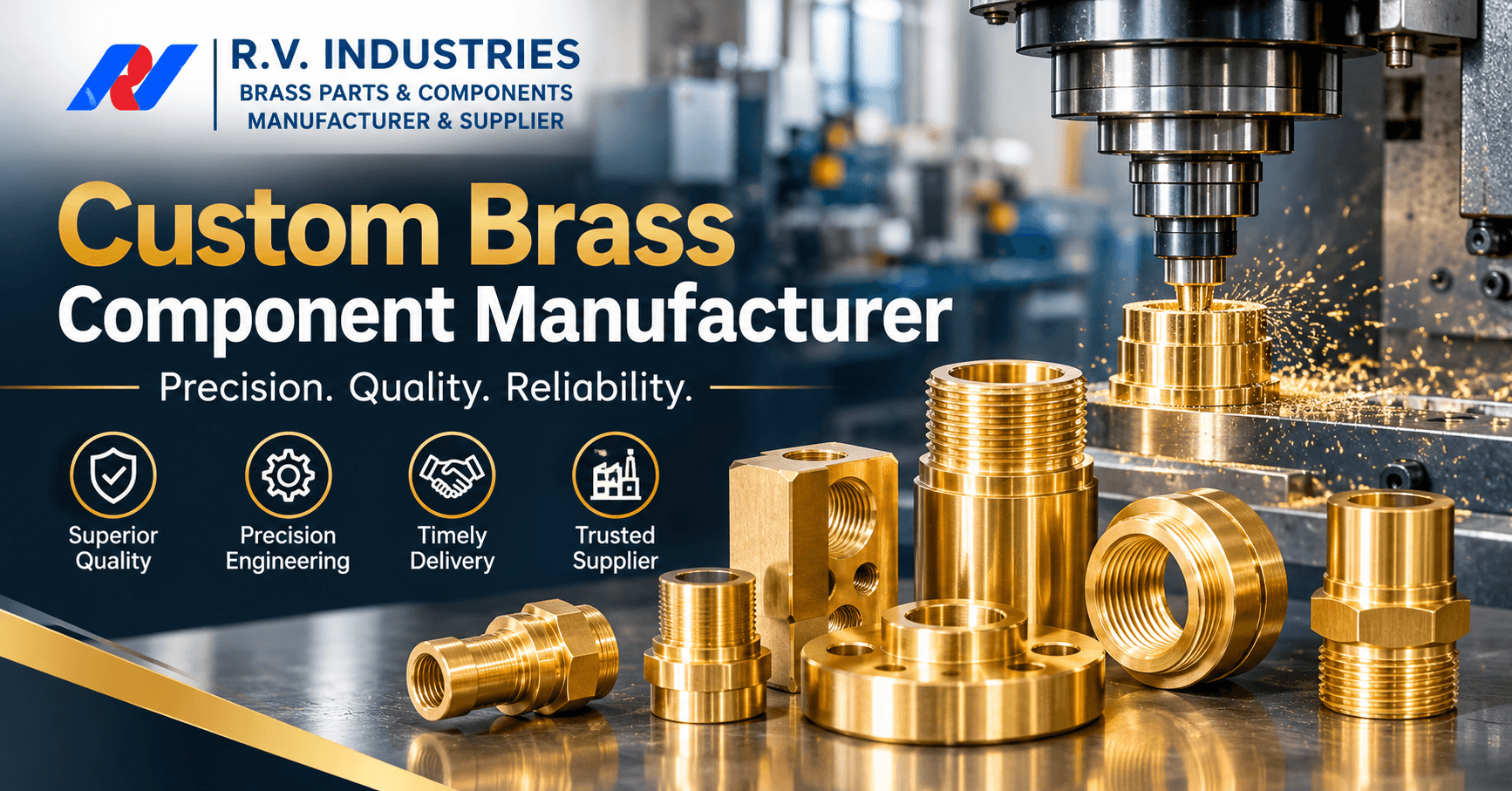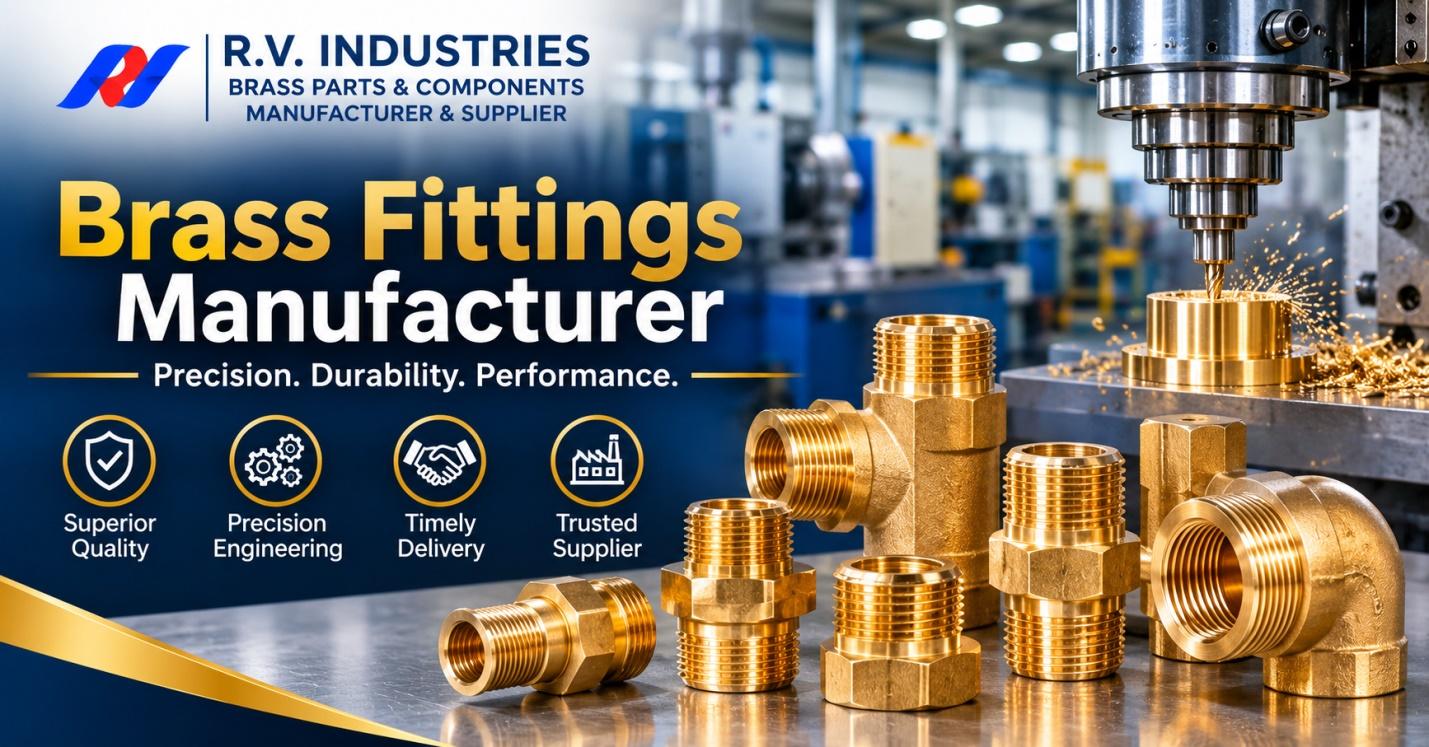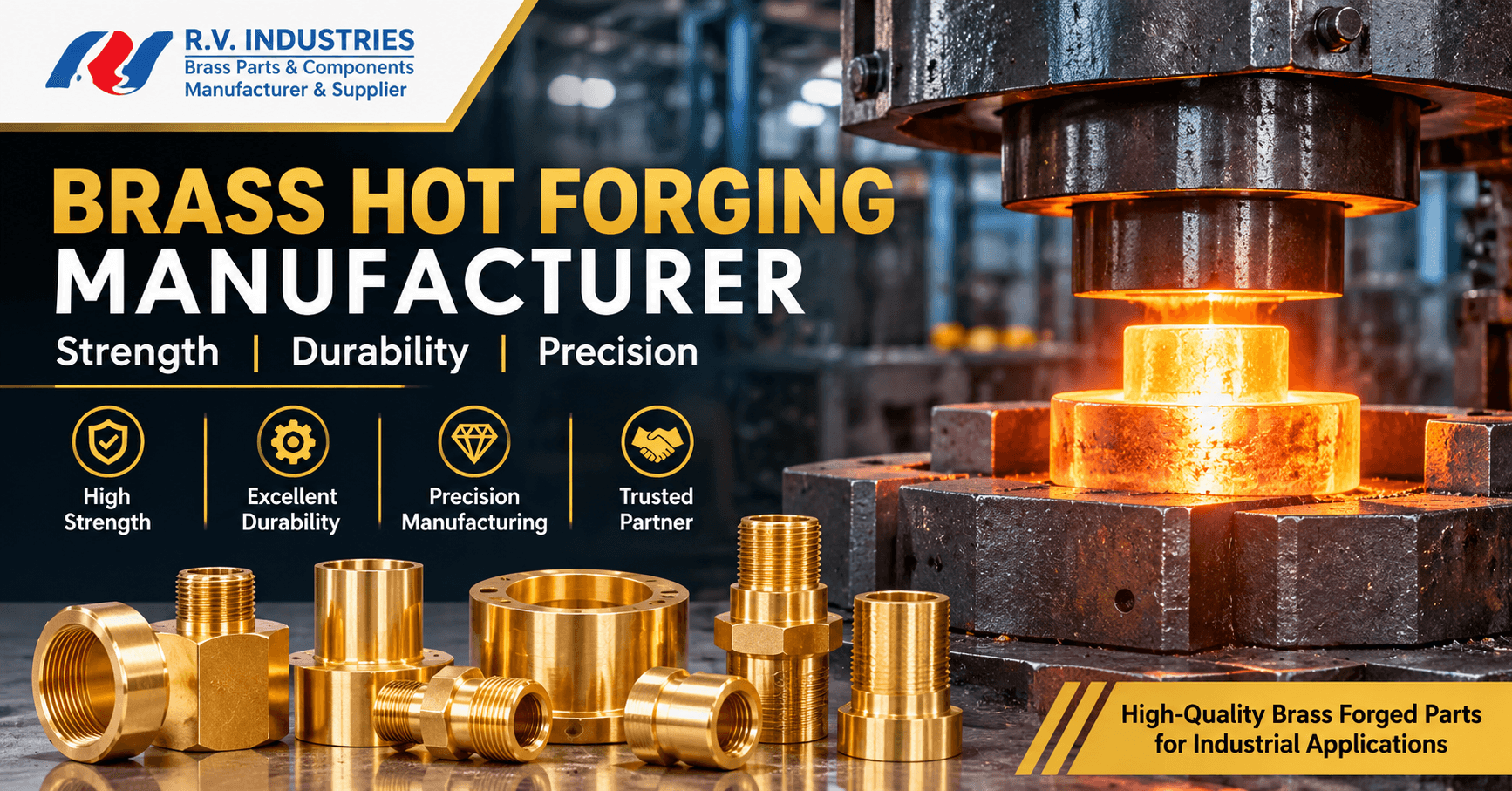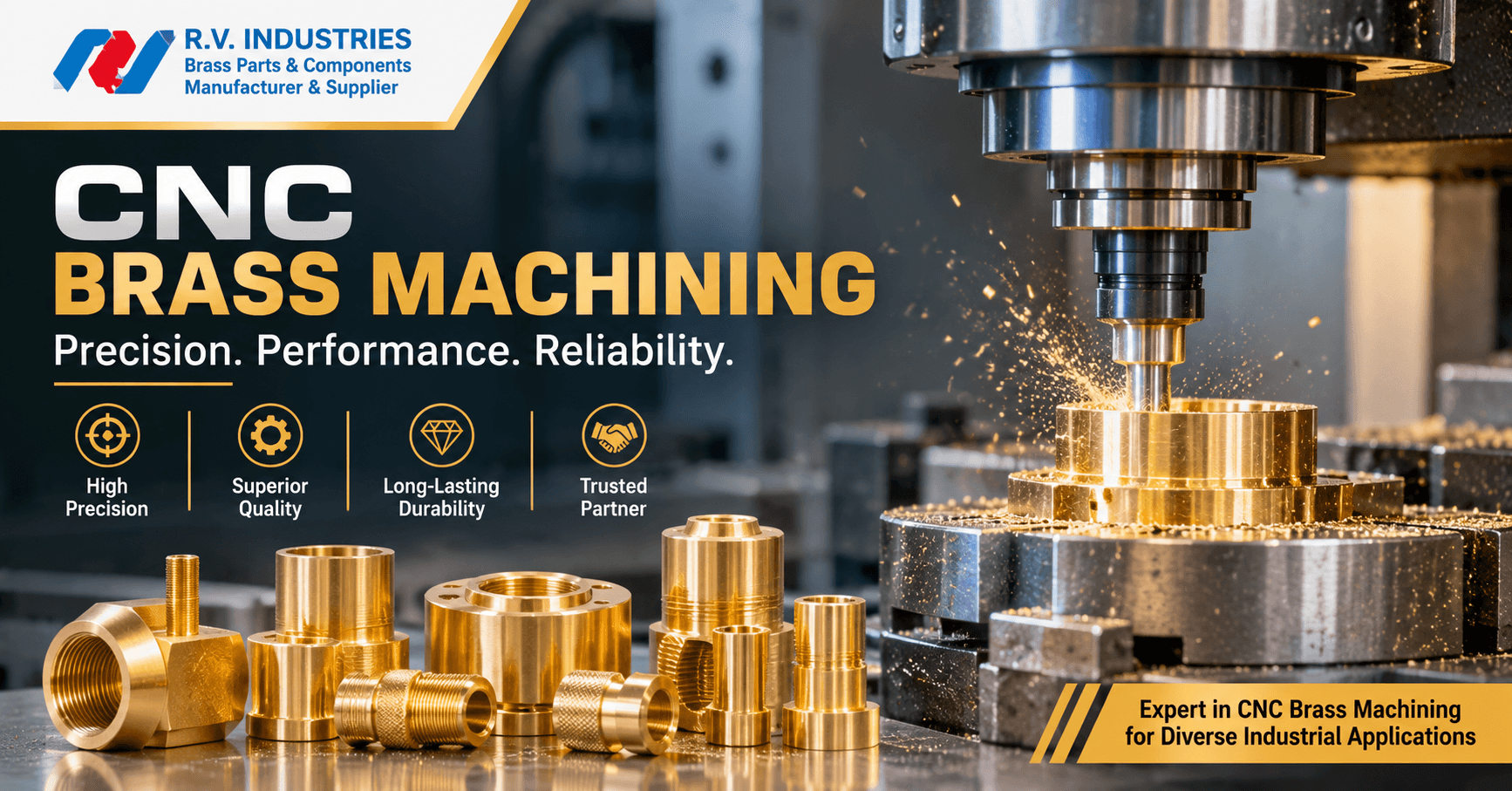
Brass components play an essential role in industries such as plumbing, automotive, electrical, engineering, and industrial manufacturing. From precision fittings and valve bodies to connectors and threaded components, manufacturers require parts that offer dimensional accuracy, reliable performance, and consistent quality. This is where CNC brass machining becomes an important manufacturing process.
For businesses looking for a reliable brass parts and components manufacturer in India, choosing the right manufacturing partner can make a significant difference. R.V. Industries combines brass hot forging and CNC machining capabilities to manufacture precision brass components according to application requirements.
But how does CNC brass machining work, what are its advantages, and how does it complement brass hot forging? Let's explore the process and its importance in modern component manufacturing.
What Is CNC Brass Machining?
CNC brass machining is a computer-controlled manufacturing process used to shape brass materials into accurately dimensioned components. CNC stands for Computer Numerical Control, which means machining operations are guided by programmed instructions rather than being controlled entirely by manual operation.
The process uses specialized machinery and cutting tools to remove unwanted material from a brass workpiece. Depending on the component design, operations may include turning, milling, drilling, threading, and other machining processes.
CNC machining is particularly suitable for brass because the material generally offers good machinability, making it possible to produce detailed shapes, accurate threads, and smooth surface finishes.
For manufacturers, this process helps achieve repeatable results across production batches while supporting components with different geometries and functional requirements.
Why Is CNC Brass Machining Important for Industrial Components?
Industrial components often need to fit precisely with other parts in an assembly. Even small dimensional variations can affect installation, sealing, alignment, and overall product performance.
CNC brass machining helps address these requirements by providing greater control over machining operations.
Here are some important advantages:
1. Improved Dimensional Accuracy
CNC machines follow programmed machining instructions, helping manufacturers maintain consistent dimensions across production runs. This is especially important for threaded fittings, connectors, valve components, and other parts requiring accurate measurements.
2. Consistent Production Quality
Once a machining program is established and validated, it can be reused for repeat production. This helps reduce variations between components and supports consistent manufacturing outcomes.
3. Complex Component Manufacturing
Some brass components feature intricate profiles, multiple machining surfaces, holes, and specialized threads. CNC turning and milling can accommodate these requirements through appropriate machining setups and tooling.
4. Efficient Production
Automated machining operations help manufacturers manage repetitive production tasks efficiently. This can be particularly useful when supplying components in larger quantities.
5. Better Surface Finishing
Appropriate cutting tools, machining parameters, and finishing operations help achieve the surface quality required for different industrial applications.
CNC Brass Machining and Brass Hot Forging: Understanding the Difference
CNC machining and hot forging are two different manufacturing processes that can complement each other.
Brass hot forging involves heating brass material to a suitable temperature and shaping it under controlled pressure using forging equipment. This process is commonly used to manufacture components requiring a specific overall shape and material distribution.
CNC machining, on the other hand, focuses on removing material to achieve the final dimensions, threads, holes, and functional surfaces.
How Do These Processes Work Together?
For certain components, manufacturers may use a combination of forging and machining.
A typical manufacturing sequence may include:
- Material selection: Choosing a suitable brass alloy based on the component's intended application.
- Hot forging: Shaping the brass material into the required approximate component geometry.
- CNC machining: Producing accurate dimensions, holes, threads, and other functional features.
- Secondary operations: Carrying out additional processes such as drilling, tapping, deburring, or finishing where required.
- Quality inspection: Checking the finished component against the relevant drawing and specifications.
This combination can be useful for components where the overall shape is suited to forging but precise functional features require machining.
What Should You Look for in a CNC Brass Machining Manufacturer?
Selecting a suitable brass machining manufacturer involves more than comparing prices. Buyers should evaluate manufacturing capabilities, material knowledge, inspection processes, and the ability to understand technical requirements.
Here are four important factors to consider:
- Manufacturing capabilities: Check whether the manufacturer offers CNC turning, milling, hot forging, and relevant secondary operations.
- Material selection: Ensure the manufacturer can work with brass grades appropriate for your application.
- Quality inspection: Look for suitable dimensional measurement and inspection processes to verify component requirements.
- Production flexibility: Consider whether the supplier can accommodate component designs, production quantities, and repeat-order requirements.
A manufacturer with integrated manufacturing capabilities can also help simplify coordination between different production stages.
R.V. Industries: Brass Parts and Components Manufacturing in India
R.V. Industries is a brass parts and components manufacturer and supplier based in Jamnagar, Gujarat, India. The company offers manufacturing capabilities that combine precision CNC machining with brass hot forging.
For buyers seeking a brass hot forging manufacturer in India, R.V. Industries provides manufacturing processes designed to support different component geometries and application requirements.
CNC Turning and Milling Capabilities
CNC turning and milling are important processes for producing brass components with accurate dimensions and functional features.
R.V. Industries' manufacturing capabilities include:
- CNC turning for precision cylindrical components.
- Bar-fed turning for suitable component designs.
- Multi-axis machining capabilities.
- Live tooling for machining complex features.
The company lists 45+ CNC machines as part of its manufacturing infrastructure. These capabilities support the production of precision-machined components for different industrial requirements.
Brass Hot Forging Capabilities
Hot forging is another important part of brass component manufacturing. It helps create component shapes before subsequent machining operations are performed.
R.V. Industries lists screw forging and hollow forging capabilities, including 300 MT screw forging and 200 MT hollow forging presses.
These processes are relevant for components such as union bodies and manifolds, where the initial forged geometry may be followed by precision machining.
Material Selection for Different Applications
Selecting the correct brass grade is essential for achieving the required machinability, strength, and application suitability.
The materials listed in R.V. Industries' manufacturing capabilities include:
- IS319 and CW614N for general brass component applications.
- CW617N and CW510L for suitable lead-free plumbing and water-related applications.
- C36000 and C3604 for applications requiring free-machining brass.
- C37700 for forging applications, including forged manifolds and union bodies.
The appropriate grade should always be selected according to the application, relevant standards, and customer specifications.
Explore the complete range of manufacturing processes, materials, and finishing options on the R.V. Industries Manufacturing Capabilities page.
Quality Control in CNC Brass Machining
Precision machining requires effective inspection to ensure that finished components meet their intended specifications.
Quality control may involve checking dimensions, thread profiles, surface conditions, and other functional characteristics.
At R.V. Industries, the listed inspection capabilities include:
Dimensional Inspection
Dimensional inspection helps verify whether manufactured components conform to engineering drawings and specified measurements.
The company's capabilities include CMM (Coordinate Measuring Machine) inspection and a Keyence Vision Measuring Machine.
Thread Inspection
Thread accuracy is particularly important for brass fittings, connectors, and plumbing components. Thread gauges can help verify whether manufactured threads meet the specified requirements.
Leak Testing
For components designed to carry fluids or gases, leak testing may be necessary depending on the application. R.V. Industries lists 100% leak testing where required.
Traceability and Documentation
Material identification and production records help manufacturers and buyers maintain visibility throughout the manufacturing process.
The company's capabilities page also lists material certificates, inspection reports, and batch traceability documentation.
Applications of CNC Brass Machined Components
CNC-machined brass components are used across numerous industries because of brass's useful combination of machinability, corrosion resistance, and electrical conductivity.
Common application areas include:
Plumbing and Sanitary Systems: Brass fittings, connectors, valve components, and threaded parts.
Automotive Applications: Precision fittings, connectors, and other application-specific components.
Electrical Industry: Brass terminals, connectors, and conductive components.
Industrial Equipment: Manifolds, union bodies, adapters, and engineered fittings.
The exact material grade and machining requirements depend on the component's operating conditions and intended function.
Frequently Asked Questions (FAQs)
1. What is CNC brass machining used for?
CNC brass machining is used to manufacture precision components such as fittings, connectors, valve parts, threaded components, adapters, and industrial hardware. It helps achieve accurate dimensions and repeatable production quality.
2. Why is brass suitable for CNC machining?
Brass generally offers excellent machinability, good corrosion resistance, and useful mechanical and electrical properties. These characteristics make it suitable for manufacturing various precision components.
3. What is the difference between brass hot forging and CNC machining?
Brass hot forging shapes heated brass material using controlled pressure, whereas CNC machining removes material using computer-controlled cutting tools. Both processes can be combined to manufacture components with forged geometries and accurately machined features.
4. How do I select a reliable CNC brass machining manufacturer in India?
Evaluate the manufacturer's machining infrastructure, material options, forging capabilities, inspection equipment, production experience, and ability to manufacture components according to technical drawings.
5. Does R.V. Industries offer both brass hot forging and CNC machining?
Yes. R.V. Industries lists both hot forging and CNC turning and milling among its manufacturing capabilities. The combination supports the production of forged and precision-machined brass components.
6. What information should I provide when requesting a brass component quotation?
Ideally, provide a technical drawing, required brass grade, component dimensions, applicable thread standards, surface finish requirements, order quantity, and intended application. These details help the manufacturer assess production feasibility and requirements.
Conclusion: Choose Precision with R.V. Industries
CNC brass machining plays an important role in modern component manufacturing by helping businesses achieve accurate dimensions, consistent production, and reliable functional features. When combined with brass hot forging, it provides manufacturers with additional flexibility in producing components with complex shapes and precise machining requirements.
For businesses searching for a dependable brass parts and components manufacturer in India, R.V. Industries offers CNC turning, milling, hot forging, secondary operations, and quality inspection capabilities under its manufacturing infrastructure.
Whether you require forged brass components, precision-machined fittings, or custom brass parts, choosing a manufacturer that understands your technical requirements is an important step.
Looking for a brass hot forging manufacturer or CNC brass machining supplier in India? Connect with R.V. Industries to discuss your component requirements and explore suitable manufacturing solutions.
Visit R.V. Industries' Manufacturing Capabilities to learn more about its processes and submit your technical requirements.